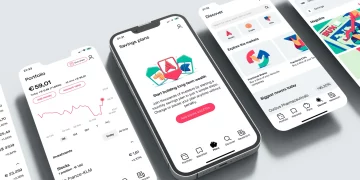
































Whoa! I remember the days when yield farming felt like a party you weren’t invited to. Short on gas, long on confusion. My gut said: “This will either change everything or burn a lot of people.” Something felt off about the hype back then. But lately, mobile wallets and better UX have shifted the balance. Now you can actually manage ERC‑20 tokens, provide liquidity, and chase yields without hauling your laptop around—if you know where to look and what to watch for.
Okay, so check this out—yield farming isn’t just about chasing APYs anymore. It’s about risk-adjusted moves you can make from your phone. For many DeFi users who prefer trading on the go, the math has to add up. Fees, impermanent loss, and the UX friction of switching chains matter a lot. On one hand, a mobile-first wallet streamlines trades. On the other hand, mobile wallets can lull you into complacency if you don’t verify approvals and addresses. I learned that the hard way once—really.
Here’s a quick picture: you hold a pile of ERC‑20 tokens (UNI, USDC, DAI, whatever). You see a farm offering 20% APY. Your instinct might say “sweet!” But actually, wait—let me rephrase that: you need to check the composition of the rewards, the slippage, the protocol’s reserve, and whether the token rewards themselves are liquid. Some rewards look juicy on paper but are illiquid or very volatile. Initially I thought high APY = free money, but then realized the nuance: APY curves, token emission schedules, and exit taxes can wipe gains fast.

Mobile wallets + ERC‑20 tokens: practical advantages and what to avoid
Mobile wallets made DeFi portable. Seriously? Yes. They let you check positions, approve tokens, and interact with DEXs while waiting in line at the coffee shop. But there’s a tradeoff—smaller screens hide details. I’ve seen people approve unlimited allowances from a phone without checking. Oof. That’s dangerous. So be deliberate. Review approvals. Revoke unused ones. And never paste a permit or signature into a chat—obvious, but people do it.
Also, not all mobile wallets are equal. Some prioritize custody (they’re self‑custody; you hold your keys). Others try to abstract away keys with custodial recovery, which can be handy but changes your threat model. I tend to prefer self‑custody for long-term positions, though I’m biased—I’ve lost keys before and it stung. If you want a mobile approach that works well with decentralized exchanges, check tools that integrate directly with DEXs. For example, a clean option is the uniswap wallet, which eases on‑chain swaps and pairs nicely with Uni‑based liquidity pools (this is not a full endorsement—it’s one solid option among many).
When handling ERC‑20 tokens on mobile, keep an eye on the token contract itself. New tokens can have hidden transfer taxes, minting rights, or admin functions that let teams tweak supply. Look at the contract on a block explorer (yes, from your phone—it’s clunky but doable). If something smells like a honeypot, trust that smell. I’m not 100% sure about every new token, but common sense helps a lot.
Liquidity pools and impermanent loss deserve a paragraph of their own because they sting. You add a paired token to a pool—say ETH and a stablecoin. If ETH swings a lot, your dollar value can diverge. Sometimes the provided trading fees + token incentives cover that. Sometimes they don’t. A good rule: for volatile pairs, only commit capital you can tolerate to be tied up for a while. If the protocol’s reward token is volatile, factor that into an effective yield estimate, not just the headline number.
Yield strategies that make sense on a phone
Short-term farming? Use single-sided staking or stable-stable pools. They’re simpler and less risky. Medium-term play? LP a stablecoin with a low-volatility token and harvest rewards periodically. Long-term? If you’re ideological and believe in a token’s roadmap, staking native tokens might fit.
But strategy without process is chaos. Build a checklist you can run through on mobile: 1) Verify contract addresses. 2) Estimate fees vs. expected rewards. 3) Check token liquidity and lockups. 4) Review admin keys and timelocks. 5) Set a harvest cadence and exit conditions. Yeah it’s tedious. It matters. I’m telling you this because I’ve skipped steps and learned the cost in gas and regret (and a little humility).
Something I like: using a wallet that surfaces contract audits and shows recent transactions for a farm. It turns an opaque process into a decision you can manage from your phone. And by the way, when you move between DEXs, slippage settings are your friend—don’t set them too wide on small cap swaps or you’ll get front‑run or dump slippage.
Common questions I get from DeFi users
Is yield farming on mobile secure?
Short answer: yes — with caveats. Use a reputable self‑custody wallet, keep seed phrases offline, and double-check approvals. Multi‑app signers and hardware‑wallet integration (if supported) add strong protections. The biggest threats are social engineering and accidental approvals; stay sharp.
What about gas fees—are mobile farmers doomed?
Gas matters. For small pools, fees can eat your gains. Time your transactions: weekdays during off hours often have lower gas. Use strategies that batch actions (harvest less often) and prefer layer‑2 or sidechain farms when possible. Sometimes being patient wins.
Which ERC‑20 tokens are safest for farming?
Stablecoins and blue‑chip tokens (with good liquidity and transparent teams) are typically safer. New meme tokens are higher risk and can have hidden mechanics. Diversify, and don’t put life savings into a single high‑APY scheme—seriously.
Alright—closing thought. I’m curious and cautiously optimistic. Mobile yield farming is maturing. The tooling is better, and the user experience is catching up to the underlying composability of DeFi. But it’s still a wild landscape. Proceed with curiosity, and bring discipline. Small routines—checklists, periodic revokes, and careful harvests—make the difference between a fun experiment and a painful mistake. I’m biased toward self‑education, though… and honestly, that part never ends. Keep learning, and trade responsibly.