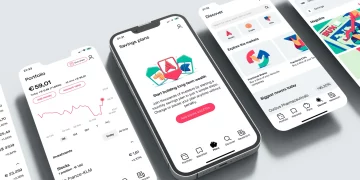



































Okay, so check this out—I’ve been poking around wallets and trading flows for years, and somethin’ keeps nagging at me. Whoa! The user experience in DeFi still splits into these silos: wallets, exchanges, analytics, socials. Seriously? We get a ledger here, a swap there, and you’ve got to be a contortionist to move value across chains while copying a pro trader. My instinct said there had to be a better way, and after using a few tools and watching friends lose time (and sometimes money), I started sketching out what a real multi-chain browser extension that supports copy-trading should actually do.
Short version: a browser extension wallet that natively handles multiple chains and integrates copy-trading changes the game. It reduces friction. It reduces risky manual bridging. It also surfaces behaviors in a way that’s more human-friendly, not just a laundry list of tokens. But, and this is crucial, it also introduces new attack surfaces if not built with hardened security models. Hmm… more on that in a sec.
At first glance, multi-chain means “add a bunch of RPC endpoints and be done.” Actually, wait—let me rephrase that. On one hand that’s the minimum. Though actually, supporting multiple EVM chains plus non-EVM chains (Solana, Aptos) requires different signing flows, key management quirks, and vastly different UX expectations. Initially I thought you could shoehorn everything into one UX; later I realized you need an adaptive interface that respects chain idiosyncrasies while keeping a single mental model for the user.

How a multi-chain browser extension wallet should behave (IRL)
Imagine opening your wallet in Chrome or Brave. Short, clear dashboard. You see assets across chains, but not dumped as a spreadsheet—more like cards that you can fold open. Tap a card, and the extension explains what fees and bridges would be required to move value. No jargon. Just “Send to Ethereum? Expect ~0.005 ETH in fees and 3-10 min wait.” Nice. Also—deep breath—integrated copy-trading: you can follow a trader, see historical P&L, view trade sizing rules, and opt-in to either on-chain execution (the extension creates signed transactions you approve) or simulated trades for a trial run.
Here’s what bugs me about current setups: most copy-trade services sit on centralized backends with custodial execution, or they ask you to constantly export/import keys. That is messy and risky. A browser extension can offer non-custodial copy-trading by using policy-driven local signing. You approve a rule once, the extension enforces limits, and every trade still requires your explicit or pre-approved signing condition. Trust, but verifiable controls—yeah, very very important.
Security architecture matters. Big time. If a wallet extension holds the ability to sign for multiple chains and to auto-execute copy trades, you can’t just rely on “nice UI” and hope for the best. Layered protections are essential: hardware wallet support (USB or BLE), transaction batching previews, address whitelists, and ephemeral session keys for copy-trading. Also, isolate the copy-trade logic so a compromised tab can’t command the signer. On the other hand, too many prompts ruin UX. So the trick is smart defaults and progressive disclosure—let novices stick to conservative presets while power users customize aggressively.
Okay, aside: (oh, and by the way…) the onboarding flow is critical. If someone is migrating from MetaMask and has funds on multiple chains, they shouldn’t have to manually add each chain or pull in ten separate token contracts. Auto-detection and curated presets help—plus an “audit my addresses” feature that flags known rug tokens and suspicious approvals. I’m biased, but I prefer wallets that nudge you away from danger rather than just throwing up a disclaimer.
Let’s talk integrations. For many users, a bridge between wallet and exchange is how they access deep liquidity and fast execution. Embedding a direct flow to an exchange—non-custodially where possible, or through a tight, audited API—makes the experience seamless. For folks who want a ready path, a reference like the bybit wallet can be an example of tight exchange-wallet integration that feels natural inside a browser extension. Embedding such a link or integration should be optional and transparent: fees, counterparty risks, and settlement times must be shown clearly.
Copy-trading itself raises behavioral questions. Who are you following? What timeframe matters? Many platforms gamify returns, which can skew behavior toward risky short-term plays. The wallet should present normalized metrics: risk-adjusted returns, max drawdown, average holding period, and example trade replays. Oh, and social proofs—talk-to-people, not just numbers. A short video clip or pinned notes by the trader helps. Humans trust humans, not charts alone.
There are UX tradeoffs with automation. Auto-execution reduces slippage and lets followers participate in high-frequency strategies, but it centralizes trust into the wallet’s execution model. Manual signing keeps control with the user but increases the chance they miss trades. My compromise? Offer tiered automation: trial mode (simulated), conservative auto (strict caps & cooldowns), and full auto (for those who really want it). Also allow per-strategy opt-outs—so if someone runs an options play, followers can choose not to participate.
Regulatory gray area alert: offering copy-trading may cross into investment advice or broker-dealer territory in some jurisdictions. If a wallet is integrated with exchange services or manages pooled funds, legal teams need to be involved early. For US users, provenance and KYC links can become complex fast. I’m not 100% sure where the lines will be a year from now, but building with modularity lets you turn features on or off per region.
Now, about recovery and backups—this is where many non-custodial solutions fail in practice. Seed phrases are brittle for mainstream adoption. A browser extension can offer advanced recovery: social recovery with threshold signatures, hardware-backed recovery, or a recovery vault that requires multi-step verification (email + hardware + social key). Each comes with trade-offs in security and decentralization, but offering options helps users choose what aligns with their risk tolerance.
Performance notes: lightweight on-chain observers, indexed local caches, and batched RPC calls matter. If the extension is slow or drains CPU, users will abandon it regardless of feature set. Keep the background processes minimal and make full sync optional. Also: privacy-preserving features like local transaction history encryption and the ability to obfuscate on-chain activity (via relays or privacy pools) should be considered, but only with clear explanations of tradeoffs.
Finally, community governance. If the wallet supports social copy-trading, it should also let the community flag bad actors and vote on feature priorities. Decentralized governance helps distribute responsibility. That said, too much on-chain governance can be noisy. Hybrid models—community boards plus emergency on-chain mechanisms—work better in practice.
FAQ
Is copy-trading safe for beginners?
Short answer: it depends. Copying a trader doesn’t remove risk. It can magnify it. Start with simulated follow or very small allocation, and prefer traders with transparent risk metrics. Use conservative auto rules and set hard loss limits—this helps prevent emotional blow-ups when markets swing.
How do multi-chain wallets handle bridging fees and timings?
Good wallets surface expected fees and estimated times before you confirm. They may offer built-in bridges or suggest third-party services, and some will batch transactions to reduce costs. Expect some latency for cross-chain finality; design your strategy around that and avoid assuming instant settlement unless you’re on a single chain with known fast finality.
So where does that leave us? I’m excited and cautious. A well-built multi-chain browser extension with thoughtful copy-trading can demystify DeFi and bring more people into multi-chain strategies without requiring them to be engineers. But it must be designed with layered security, honest UX, and clear risk controls—or else it becomes another attack vector. The tech is ready. The challenge now is building with humility, not hype. And hey—if a tool can get that balance right, I’ll be first in line to try it (and to nitpick it, too… I’m picky, what can I say).