
































Okay, so check this out—privacy wallets can feel like a tangle. Wow! For a long time I treated Monero wallets like black boxes: run the app, send the coins, hope for the best. My instinct said that not all wallets are equal. Seriously? Yes. And after using several options on both iOS and Android, somethin’ about Cake Wallet kept pulling me back.
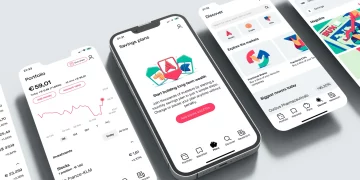
At a glance Cake Wallet looks simple. Short setup. Clean UI. But under the hood it focuses on features that matter to privacy-focused users: lightweight node options, integrated support for XMR and several other currencies, and mobile-first design patterns that reduce attack surface. Initially I thought “pretty UI means convenience”—but then realized that convenience often hides dangerous defaults. Actually, wait—let me rephrase that: a pretty UI is great, but only if the wallet exposes the right privacy controls and explains tradeoffs clearly.
Whoa! Here’s the thing. If you care about anonymous transactions you need to think about more than just the coin. You need to consider metadata—how your device makes RPC calls, whether the app leaks addresses, and whether you can avoid centralized exchange integrations that broadcast KYC. On one hand a wallet that hides complexity is useful; on the other hand that same hiding can obscure important privacy settings. It’s a balance, and Cake Wallet tries to walk it.

What Cake Wallet does well (and where it trips up)
First, Cake Wallet is very user-friendly for Monero (XMR). It supports creating native XMR wallets and can connect to remote nodes or let you run a local node if you want. My quick gut check: privacy-first users should avoid public remote nodes unless they trust them, because node operators can observe IPs and correlate activity. Hmm… that part bugs me about most mobile setups. But Cake gives options, which is important.
Second, it handles multi-currency flows without being cluttered. Medium sentence length here for clarity. Longer thought: the wallet’s exchange integrations (when available) are convenient, though they sometimes nudge users toward on-ramp/off-ramp services that require identity, and that tension between privacy and convenience is real for many people who just want to cash out occasionally without exposing everything.
Third, Cake Wallet’s UX reduces friction for everyday private transfers—address book, QR support, and integrated notifications—so people actually use privacy features instead of avoiding them. But, and this is crucial, mobile environments carry different risks. If your phone is compromised (phished apps, malicious profiles, compromised backups), your “private” transactions could be exposed. On the road, I always assume my device is the weak link.
Practical tips for keeping XMR transactions private
Don’t overcomplicate things. Short tip: minimize reuse of addresses. Use subaddresses. Medium: prefer private remote nodes you control, or run your own node when possible. Long thought: and when you must use a remote node, pick one you trust, rotate endpoints occasionally, and consider combining node selection with Tor or an always-on VPN to decouple your IP from on-chain behavior when that’s feasible.
I’m biased, but I think people underestimate how much metadata leaks via mobile backups. Seriously—if you back up to cloud services unencrypted or sync app data, you may be leaking your wallet’s metadata to third parties. So: turn off automatic backups for wallet files unless you encrypt them yourself, and store seeds in hardware or air-gapped paper backups where practical.
Also—be cautious with integrated exchanges. They make life easier, but convenience often trades off privacy. If you need fiat rails, use them sparingly and plan for identity exposure. On the other hand, for peer-to-peer XMR trades, mobile wallets like Cake Wallet are very handy because they let you create and share subaddresses quickly and without heavy setup.
How Cake Wallet fits a privacy-first workflow
For me, a privacy-first workflow looks like this: generate a fresh wallet seed offline, configure a trusted node (or run a node on a cheap VPS), keep the seed air-gapped, and transact with subaddresses. I pair the mobile app for signing with an occasional desktop verification. This hybrid approach reduces the single-device risk while keeping mobile convenience. My instinct said this would be annoying—but once you get the hang of it, it’s pretty seamless.
Check this out—if you’re ready to try it, you can download the mobile client here: cake wallet. One link, one place, and remember: always verify the build and the signing keys when possible. Little details like app provenance and update channels are very very important.
FAQ: Quick answers for busy privacy users
Is Cake Wallet a good Monero (XMR) wallet?
Yes—it’s one of the more user-friendly mobile wallets for XMR and supports core privacy features like subaddresses and node configuration. That said, “good” depends on your threat model. For high-risk users, combine Cake with offline cold storage and self-hosted nodes.
Will using Cake Wallet make my transactions 100% anonymous?
No—no setup can guarantee absolute anonymity. Monero offers strong on-chain privacy, but device-level metadata and network-level observations still matter. Use Tor/VPN, avoid cloud backups for wallet files, and keep seeds offline when possible.
What are the biggest mistakes people make?
Reusing addresses, keeping seeds in cloud notes, blindly using public nodes, and relying too heavily on integrated exchanges without understanding KYC. Also, people often forget to verify app packages or updates—don’t be that person.
One last honest note: I’m not 100% sure about everyone’s workflow—different people have different priorities. Some prefer pure usability; others will endure friction for privacy. On one hand I want mobile wallets to be easy. On the other hand I keep reminding folks that every convenience can introduce leaks. Balance is key, and Cake Wallet is one of the tools that helps you find it—if you pay attention to the knobs.