

































A Superficial Fight Hiding a Structural Weakness
Trade wars dominate headlines, spark political debate, and cause stock markets to convulse. From U.S.-China tariffs to semiconductor export bans and retaliatory measures across Europe and Asia, policymakers argue these confrontations are defensive maneuvers to protect domestic industries and strategic interests. But beneath the surface noise, a more insidious threat is brewing—one that’s not as politically palatable but far more economically dangerous: declining productivity. While the global economy contends with tariffs, sanctions, and reshoring incentives, a more lasting problem is being sidelined—weak investment in innovation, stagnant labor efficiency, and the widening gap between potential and actual output.
The question isn’t just whether tariffs are slowing trade—it’s whether they’re concealing a deeper malaise. Decades of research confirm that productivity, especially total factor productivity (TFP), is the bedrock of long-term economic growth. But since the early 2000s, productivity gains have slowed dramatically across developed economies. Now, as countries become increasingly focused on economic nationalism, supply chain autarky, and industrial protectionism, the incentives to invest in transformative innovation are fading. Are trade wars not only eroding global cooperation but also deterring the one thing that makes economies richer over time—productivity?
OECD Data: The Innovation Slowdown No One’s Talking About
Data from the OECD paints a troubling picture. From 2010 to 2020, R&D spending as a percentage of GDP stagnated in many G7 countries. In the post-COVID era, despite rhetoric around “innovation-led recoveries,” much of the fiscal firepower has been directed at subsidies, tariffs, or reshoring incentives—none of which necessarily boost productivity. While the U.S. and China have both announced massive semiconductor and clean tech subsidies, these often replace, rather than supplement, private sector innovation.
For example, Japan’s R&D spending relative to GDP has dropped from 3.5% in 2008 to just under 3% in 2023. In Germany, productivity growth in the manufacturing sector has stalled even as the country becomes more protectionist in critical areas like autos and energy. In the U.S., while headline numbers for tech-sector investment appear strong, the majority of capital is concentrated in a handful of mega firms like Nvidia, Microsoft, and Amazon. Outside of these giants, the innovation ecosystem—especially among mid-cap manufacturers and services—has deteriorated.
The OECD’s 2024 Productivity Outlook found that “protectionist policies have tended to shield low-productivity firms, reduce exposure to global best practices, and delay the reallocation of resources to high-efficiency sectors.” In other words, tariffs may be inadvertently propping up inefficiencies. Rather than enabling the “reindustrialization” of Western economies, protectionist tools are distorting competitive signals.
Automation vs. Protectionism: A Fork in the Road
A key economic tradeoff is emerging between embracing automation and erecting trade barriers. In theory, both are responses to the same pressures: wage inequality, global labor arbitrage, and corporate margin compression. But their economic consequences diverge sharply.
Automation—driven by AI, robotics, and digitization—boosts labor productivity by enabling workers to produce more output per hour. Protectionism, by contrast, restricts competition and incentivizes firms to cut costs through shortcuts like underinvestment in capital or regulatory lobbying. In the short run, protectionist measures can preserve jobs. But in the long run, they erode productivity gains by weakening the Darwinian forces that drive innovation.
This tension is playing out in manufacturing hubs across North America and Europe. For instance, Mexico’s maquiladora regions and Vietnam’s tech assembly zones are seeing a flood of investment as Western firms diversify away from China. But instead of deploying cutting-edge automation, many are simply replicating older, labor-intensive models. “China+1” strategies may reduce geopolitical risk, but they do little to advance productivity if automation isn’t central to the build-out.
Meanwhile, China has doubled down on automation, not just in tech but across logistics, steel, agriculture, and services. The result is an emerging divide: while the West debates how to protect jobs, China is creating jobs that didn’t exist by boosting productivity.
The Long-Term GDP Cost of Ignoring Productivity
The consequences of weak productivity are far from theoretical. Long-term GDP potential is fundamentally linked to how efficiently economies use labor and capital. The IMF estimates that if current productivity trends persist, global potential GDP growth could fall below 2% by 2030, compared to nearly 4% in the early 2000s.
Slower GDP growth means diminished fiscal space for public investment, rising debt burdens, and increased intergenerational inequality. Pension systems, already under strain in countries like Italy, Japan, and South Korea, become unsustainable. Healthcare infrastructure faces shortfalls. Climate transition goals become unaffordable. In effect, poor productivity is the slow-moving crisis that amplifies every other crisis.
Moreover, weak productivity makes monetary policy less effective. With economies growing sluggishly even at near-zero interest rates, central banks are trapped in a perpetual balancing act—stimulate demand while keeping inflation anchored. If productivity growth were stronger, central banks could raise rates without choking growth, and governments could spend more without spooking bond markets.
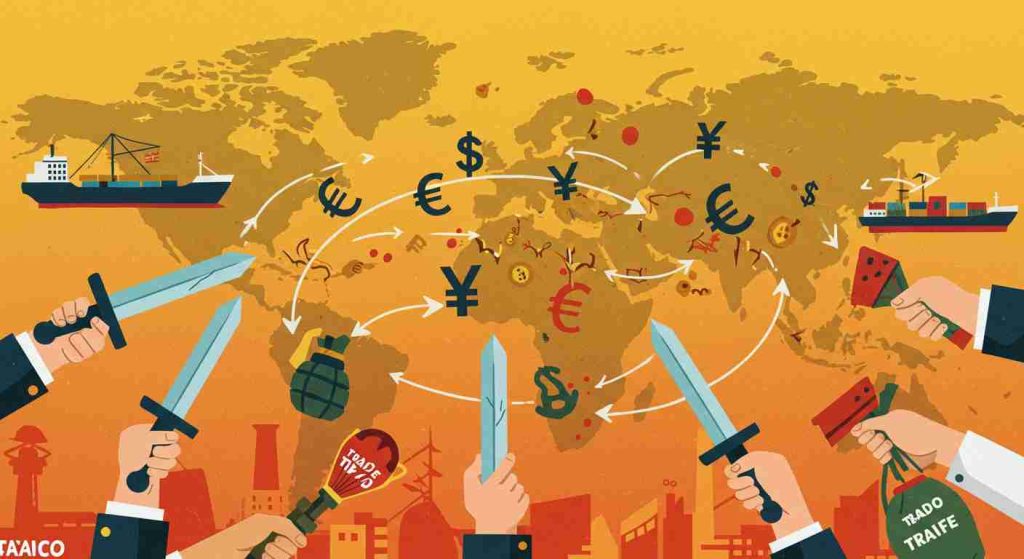
The hidden irony is that many protectionist policies—intended to secure economic independence—actually exacerbate dependence by reducing GDP resilience. The U.S.-China tariff war, now in its seventh year, has shaved an estimated $1.7 trillion from global GDP, according to a 2025 report from the Peterson Institute for International Economics. And yet, it has done little to materially increase domestic productivity in either country.
How to Refocus: Productivity as Policy Priority
To avoid being locked into a low-growth trap, governments must redirect attention from protectionism to productivity. This starts with revitalizing R&D incentives, particularly for SMEs that often lack the scale to fund long-term innovation. Tax credits for automation, grants for process innovation, and co-investment platforms can help de-risk productivity-enhancing investments.
Second, labor market policies must be upgraded. In many countries, workers displaced by automation or trade shocks are given modest unemployment support but little retraining. A modern productivity agenda would treat workforce reskilling as a form of infrastructure—crucial for raising potential output.
Third, policymakers should embrace open competition, even in sensitive sectors. Instead of using tariffs to block competition, governments can require higher productivity standards for access to subsidies or public procurement contracts. For instance, linking defense or EV subsidies to firm-level productivity benchmarks would prevent a race to the bottom.
Fourth, infrastructure investment should go beyond roads and ports to include digital capacity, AI deployment readiness, and supply chain efficiency. The more frictionless the flow of data and goods, the higher the potential productivity.
Lastly, multinational collaboration remains vital. The global economy benefits most when best practices in technology and logistics diffuse quickly. Multilateral R&D partnerships, open standards for AI and robotics, and global productivity benchmarks should be part of a coordinated post-protectionist vision.
Conclusion: A Crisis Misdiagnosed
Trade wars may be politically potent and visually dramatic—but they risk masking a far more systemic problem: the slow erosion of productivity growth. In an age where innovation should be accelerating thanks to breakthroughs in AI, biotech, and energy, the fact that global productivity is plateauing should alarm every policymaker, CEO, and investor.
We are misdiagnosing a structural illness as a geopolitical fever. By overemphasizing the role of trade balances, tariffs, and industrial rivalry, we are underestimating the power of automation, innovation, and competition to drive long-term prosperity. If global leaders truly want to protect future jobs, raise wages, and grow economies, they must pivot from protectionism to productivity. Anything less will be a self-inflicted recession.